
Nigeria's Blockchain Gamble: Can Code Fix a Fractured Democracy?
- Nigeria explores blockchain to enhance electoral integrity and public trust ahead of 2027 elections. - Blockchain aims to address voter registration issues via immutable records and smart contracts for real-time eligibility checks. - Experts propose hybrid voting systems (online tokens + physical cards) to bridge Nigeria's 60% internet access gap. - Challenges include political resistance to transparency, cybersecurity risks, and institutional reforms for impartial INEC appointments.
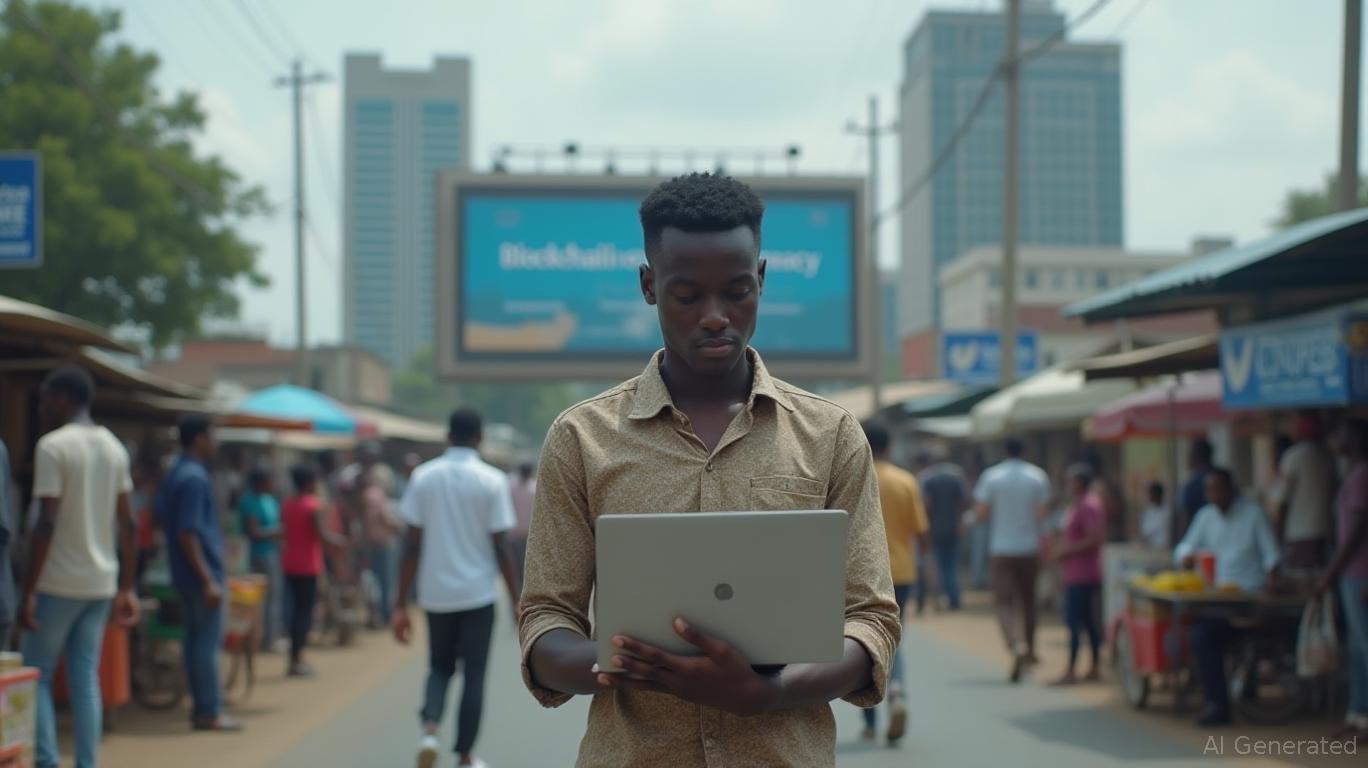
Nigeria is exploring blockchain technology as a potential solution to strengthen electoral integrity and restore public trust in its democratic processes ahead of the 2027 general elections. With a history of challenges such as duplicate voter registrations, weak integration with national databases, and declining voter turnout, the Independent National Electoral Commission (INEC) has initiated a nationwide Continuous Voter Registration (CVR) exercise. The process, which includes both online pre-registration and in-person registration, aims to update the voter registry and reduce errors such as duplicate entries and missing information.
Blockchain is being considered as a key innovation to address these persistent issues. The technology offers immutability, decentralisation, and transparency, which can enhance the reliability of voter registration. According to Yiaga Africa’s research, the use of blockchain can help integrate voter data with national databases such as the National Identification Number (NIN) and the National Population Commission (NPC) database. This would enable the automatic removal of ineligible voters, such as minors or deceased individuals, through the use of smart contracts—self-executing codes that enforce eligibility criteria in real time.
Safiya Bichi, Head of Knowledge Management and Learning at Yiaga Africa, highlights that blockchain can provide a tamper-proof record of voter information, preventing manipulation through overbloating or underrepresentation in the voter rolls. Once registered, a voter’s data becomes part of an immutable digital footprint, ensuring that changes or deletions are visible to all participants in the system. This level of transparency could help reduce fraud and enhance public confidence in the electoral process.
The potential of blockchain extends beyond voter registration to electronic voting and result transmission. Countries such as India, Estonia, and Sierra Leone have experimented with blockchain-based systems to improve election transparency and voter access, particularly for diaspora communities. Olayinka Omoniyi, a blockchain expert, argues that Nigeria could adopt a hybrid system combining online and in-person voting. In this model, urban, tech-savvy voters could cast their ballots remotely using tokens or non-fungible tokens (NFTs), while rural or less digitally literate voters would use physical cards at blockchain-integrated polling stations.
However, the implementation of blockchain in Nigeria’s electoral system is not without challenges. Political will remains a critical barrier, as many leaders benefit from the status quo and may resist reforms that increase transparency. Additionally, Nigeria’s digital divide—60% of the population lacks internet access—requires extensive civic education and infrastructure development to ensure equitable participation. Moreover, cybersecurity concerns persist, particularly with INEC’s history of facing thousands of cyber threats per election cycle. Public blockchains like Solana or Nigeria’s homegrown Bantu Blockchain are being considered for their capacity to handle large-scale transactions securely.
Civil society organisations, including Yiaga Africa, have also raised concerns about the politicisation of INEC appointments and the need for institutional reforms to safeguard the integrity of the electoral process. A two-stage appointment process, involving public participation and open Senate screenings, has been proposed to insulate the commission from political interference. Such measures, alongside technological advancements like blockchain, could help restore trust in the electoral system.
While the feasibility of implementing blockchain-based voting by 2027 is being debated, the consensus remains that Nigeria must act decisively to modernise its electoral infrastructure. By adopting innovative technologies and strengthening institutional safeguards, the country has the potential to become a continental leader in democratic innovation, setting a precedent for other African nations grappling with similar electoral challenges.
Source:
Disclaimer: The content of this article solely reflects the author's opinion and does not represent the platform in any capacity. This article is not intended to serve as a reference for making investment decisions.
You may also like
Nvidia (NVDA.US) New CEO Candidates and Market Predictions: Trump Nominates Cook as Successor
As the successor remains uncertain, external voices have already begun to "make choices" for Nvidia.
Safe haven halo fails? US Treasury sell-off returns, Wall Street just breathed a sigh of relief and is startled again
Just as global bond investors began to believe that the worst phase of this year's sell-off had passed, the surge in U.S. Treasury yields has forced them to reassess that judgment.

Before the Jensen Huang scandal broke out, the Quant King precisely cleared out Nvidia!
The latest 13F filing shows that quantitative giant Renaissance Technologies almost completely sold off its holdings in Nvidia (reduced by 99.7%), Meta (reduced by 99.9%), as well as other tech giants like Apple and Amazon in the third quarter, and significantly reduced its position in Palantir. At the same time, it heavily increased its holdings in Micron Technology (up by 618.7%), AMD, and SanDisk, as well as other storage and chip stocks.
British Pound extends losing streak against US Dollar, US PPI in focus

Crypto prices
More


